The Koaʻe kea, or white-tailed tropicbird, is a native seabird found throughout the Hawaiian Islands. Though they spend much of their lives solitary and at sea, these birds return seasonally to rocky cliffsides from Kauaʻi to Hawaiʻi Island to breed.
From March through October, koaʻe kea gather at one of their long-established breeding colonies at Kaluapele, adorning ʻŪekahuna and Halemaʻumaʻu, within Kīlauea volcano.
Koaʻe return to their same partner year after year, raising a single chick together each season in rocky crevices along the crater walls. Their white plumage, streaked with black along their eyes and wings, and long, ribbon-like tail feathers called streamers, play a central role in their aerial courtship and bonding rituals.
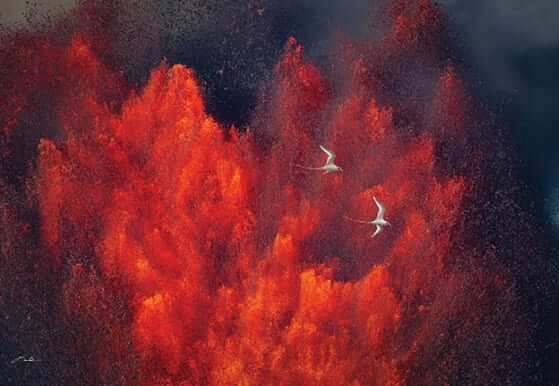
Although awkward on foot, Koaʻe kea are mighty flyers, capable of staying aloft for long periods as they forage over the ocean for tasty mūheʻe and mālolo. At Kaluapele, one can see them soaring near the intense heat of Pele’s explosive fountains, riding the thermals with precision and grace.
This behavior, sometimes precarious, is an adaptive marvel that turns each eruption into a kind of performance, one where the elegance of flight contrasts sharply with the raw creation of new earth. Koaʻe are truly a dazzling companion to the living breath of Kīlauea.