
By Anuhea Diamond
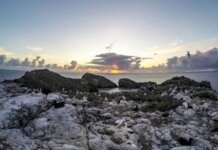
Core memory established. So many feelings on so many levels and still processing our huakaʻi to Nihoa and Mokumanamana in Papahānaumokuākea this past June.
These are some of those feelings. A reflection and recognition of something old, new, and realigning. It’s still processing and slowly being put into words.
NOAA (National Oceanic and Atmospheric Administration) led this huakaʻi in partnership with the Office of Hawaiian Affairs (OHA) bringing together the Papahānaumokuākea Native Hawaiian Cultural Working Group (CWG), Nā Maka Onaona, Palikū Documentary Films, DLNR DAR, Kua ʻĀina Ulu ʻAuamo Limu Hui, MEGA Lab, and UH Mānoa SOEST.

Objectives of the voyage included conducting biocultural intertidal research led by Nā Maka Onaona; completing productivity and carrying capacity surveys of ʻopihi populations; performing huli ʻia observations, a kilo methodology developed by Nā Maka Onaona; and using drones and GoPro technology to survey shoreline habitat.
Led by CWG co-chair Dr. Kekuewa Kikiloi and CWG member and Palikū Documentary filmmaker Nāʻālehu Anthony, the second objective of the voyage was to conduct interviews and collect drone video and still images of the islands.
This huakaʻi reaffirmed the kuleana we have as a lāhui to make sure we have aloha ʻāina as our kahua. In my work capacity, I see how important our kūlana is to hold these spaces and be placeholders, while advocating for our rights, protections, and overall healing.
ʻAnakala Aliʻi Miner put it best: “We riding off moʻolelo from kūpuna and you come up here and it all unfolds again.”
It’s that reawakening of what is innate in all of us to mālama, relearn, unlearn, and holo mua me ka pono. I’m forever in awe of our delicate relationship with ʻāina and how we can hoʻomau through all that has happened, be present in all that is here, and be mākaukau for what is to come.
I don’t quite have the words yet, but I can say that in just eight days something special happened. It’s such a genuinely good feeling to be among Kānaka so ʻono for life and on a path to learn what it means to mālama.
There is much work ahead, but if we honor our lāhui, pae ʻāina Hawaiʻi and world through the way we aloha and revere our kūpuna and kūpuna islands in all that we say and do, then we are that much further ahead on the journey.
Normalizing huakaʻi, kilo, science, research, moʻolelo, and ma ka hana ka ʻike (in doing one learns) will continue to be key components as we ʻauamo (carry) and carefully pass on and share manaʻo and ʻike to the hanauna (generations). The ʻōlelo noʻeau, “Hele pū nō me ka lima; when traveling, take the hands along” speaks to those who say yes to all that is asked of them while on a huakaʻi.
I can only hope that whatever I share resonates in others and continues to build and mend pilina among hui and in individuals. I’m forever grateful for being a part of this one. E ola.