
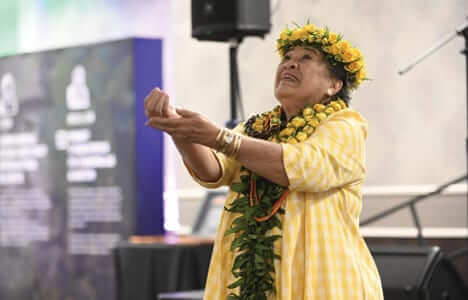
Nearly 40,000 Native Hawaiians now call Clark County, Nevada, home. And this past June, many of them gathered at Palace Station in Las Vegas for the 3rd Annual Ka ʻAha Hoʻolauna Aloha (KAHĀ), a vibrant celebration of Hawaiian culture, language, and traditions.
This year’s KAHĀ , held June 27-29, honored the island of Kauaʻi with the theme “Maikaʻi Kauaʻi, Hemolele i ka Mālie” (Beautiful Kauaʻi, Peaceful in the Calm). The gathering creating a space for multigenerational Hawaiian families and Kānaka kākoʻo (those who support Native Hawaiians) to reconnect with their roots while living far from home.
KAHĀ’s origins are deeply spiritual. Inspired by a moe ʻuhane (dream) on New Year’s Day 2023, founder Dwayne Kuʻualohanui Kauliʻa saw a joyful gathering of people, signaling the need to create a space for Hawaiian community connection and healing.
Supported by kūpuna and loea, the dream became a hoʻokō (fulfillment) of four pillars: aloha, hoʻoponopono, ʻike hoʻoilina, and honoring Kamehameha Paiʻea.
Gatherings like KAHĀ allow Kānaka to remain ʻonipaʻa (steadfast) despite the challenges we face, and move forward while grounding themselves in aloha, culture, and language.
KAHĀ 2025 featured over 20 kumu and loea from across Hawaiʻi and the continent – nearly half of whom were from Kauaʻi – sharing ʻike and moʻomeheu (knowledge and culture) through hands-on, interactive workshops. Participants learned hula kahiko and ʻauana under the guidance of nā kumu hula Puna Dawson, Maka Herrod, Kalani Flores-Hatt, and Leimomi Ho, while also engaging in oli, mele, and Hawaiian language immersion.
Hana noʻeau were showcased through lauhala weaving, lei-making, kapa, and featherwork, allowing attendees to create pūpū Niʻihau earrings and bracelets, raffia kūpeʻe, and nā hulu kāhili paʻa lima. The Kauaʻi cultural practitioners who shared these hana noʻeau included me, Kumu Sabra Kauka, and ʻAnakē Awapuhi Kahale (Niʻihau).
Sessions on lāʻau lapaʻau, Hawaiian ecosystems, Kauaʻi and Niʻihau moʻolelo, and sacred hymns provided a holistic cultural curriculum that embraced the mind, body, and spirit. KAHĀ was blessed with experts and practitioners from Kauaʻi including Tuti Kanahele, Mike Demotta, Chucky Boy Chock, and Pam Smith Chock.
“This gathering isn’t just about learning skills; it’s about living the legacy of our kūpuna and healing as a lāhui,” Kauliʻa shared during the opening ceremony, emphasizing that aloha remains the foundation of all that we do, wherever we are.
With Clark County’s growing Hawaiian community, KAHĀ serves as a cultural bridge, addressing the longing for connection and opportunities for cultural immersion that many Kānaka living on the continent desire.
For many participants, KAHĀ is a rare opportunity to practice and normalize ʻōlelo Hawaiʻi, to build ʻike pilina (healthy relationships), and to deepen their ʻike honua (sense of place) while living away from Hawaiʻi nei. It also fosters intergenerational learning, with kūpuna, parents, and keiki engaging side by side in activities that celebrate their heritage.
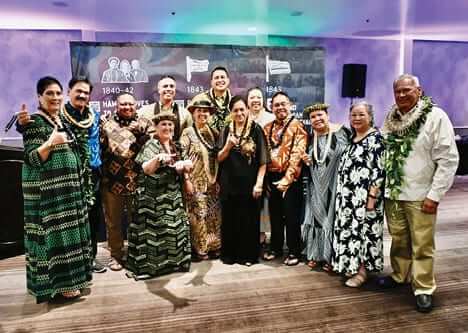
Ka ʻAha Hoʻolauna Aloha, Inc. (KAHĀ) is a Hawaiʻi-based nonprofit organization dedicated to building and strengthening the Hawaiian community on the continent while connecting them to the lāhui and ʻāina aloha. The organization is led by Kauliʻa who serves as president, and the KAHĀ Board of Directors with members representing Hawaiʻi, Clark County, and California.
KAHĀ’s commitment to fostering aloha, culture, language, and community ensures that Hawaiians across the Pacific are empowered to live their heritage fully while navigating life in the diaspora.
As KAHĀ continues to grow, the organization plans to expand its offerings and deepen its partnerships to bring even more opportunities for cultural exchange, language revitalization, and intergenerational learning to Kānaka Maoli living away from Hawaiʻi.
Whether you are a lifelong learner, a kumu, or a Hawaiian seeking to reconnect, KAHĀ offers a welcoming space to practice, learn, and celebrate together.
As KAHĀ reminds us, “ʻO ke aloha nō ka mea nui” (love is indeed the most important thing). In a world of change, gatherings like KAHĀ 2025 are vital reminders that aloha, culture, and language keep us grounded, connected, and strong – no matter where we live.
To learn more about KAHĀ, explore upcoming programs, or become a sponsor or vendor, visit hawaiikaha.org. Here, you will find resources for families, workshop registration, and ways to support this mission of aloha.


,%20a%20vibrant%20celebration%20of%20Hawaiian%20culture,%20language,%20and%20traditions.)