
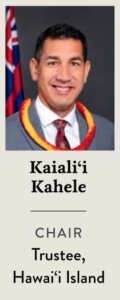
 The Office of Hawaiian Affairs (OHA) recently adopted a $136 million biennium budget with a supermajority of the Board of Trustees. It’s a budget that took months to build, countless hours of public presentations, and hard, sometimes uncomfortable conversations. It’s also the most transparent and community-driven budget process in OHA’s nearly 50-year history.
Let’s be clear: this wasn’t a backroom deal. Every decision, every motion, and every amendment happened in public view. We debated in real time. We listened to educators, advocates, and beneficiaries. And we made course corrections when it became clear the path forward needed to change.
84% of the Budget Was in Lockstep
Excluding personnel and travel, 84% of this budget aligned with OHA administration’s original proposal. Only around $2–4 million (roughly 2% of the total) was under active debate. That small percentage mattered because it reflected our kuleana as trustees to ask hard questions about which programs and partners are best positioned to deliver results for Native Hawaiians.
We didn’t always agree on how to invest, but we were unified on the why: improving Native Hawaiian wellbeing, strengthening education, supporting economic mobility, and protecting ʻāina.
Listening and Course Correction: Charter Schools
One of the most significant moments in this budget process came late. Initially, the budget proposed equal funding distributions to Hawaiian-focused charter schools to avoid potential conflicts of interest – after all, some trustees have family members in these schools.
But we listened. We heard from school leaders who explained how harmful equal distribution would be to some of our most vulnerable communities. They asked us to reconsider, and we did. The result? OHA made its largest investment ever in Hawaiian-focused charter schools. The data supported it. The community demanded it. We aligned our actions.
Stronger Oversight and Accountability
This budget isn’t just about dollars; it’s about how those dollars are managed. We strengthened due diligence requirements, added conflict-of- interest safeguards, and expanded BOT oversight of awards. Many former non-competitive awards are now competitive, with higher reporting and transparency standards.
We welcome partnerships with private and community organizations, but not at the expense of trust or integrity.
Living Wages for OHA’s Workforce
We also looked inward. For too long, some OHA employees earning under $100K had been overlooked for salary adjustments – some for nearly a decade. This budget changed that. We approved targeted increases for staff earning below Hawaiʻi’s living wage standard and with more than two years of service.
The result: every OHA employee now earns at or above a true living wage for Hawaiʻi. We hope this sets an example for other state agencies.
Setting the Record Straight on Trustee and Executive Pay
Let’s address a common misconception: Trustees did not vote to raise our own pay. The 2024 OHA Salary Commission mandated adjustments after a 15-year gap. A handful of executive positions saw increases, primarily at the CEO’s urging to help recruit and retain top talent. But the priority was clear – raise up those at the bottom first, not enrich the top.
A Budget That Reflects Our Values
This biennium budget reflects what happens when leaders are willing to listen, adapt, and prioritize community needs over politics. It’s not perfect – no budget ever is – but it represents a bold step forward, grounded in transparency, fairness, and fiduciary responsibility.
As chair of the Board of Trustees, I believe OHA’s beneficiaries deserve nothing less. This budget is a promise to our lāhui: we are committed to doing better, being better, and ensuring every dollar entrusted to us serves the people of Hawaiʻi.

%20recently%20adopted%20a%20$136%20million%20biennium%20budget%20with%20a%20supermajority%20of%20the%20Board%20of%20Trustees)