



By Ardena Sanoe Saarinen, M.S., OHA HLID Project Coordinator
This summer marks a pivotal moment in the long-standing efforts to restore the historic agricultural lands of Luluku in the ahupuaʻa of Kāneʻohe.
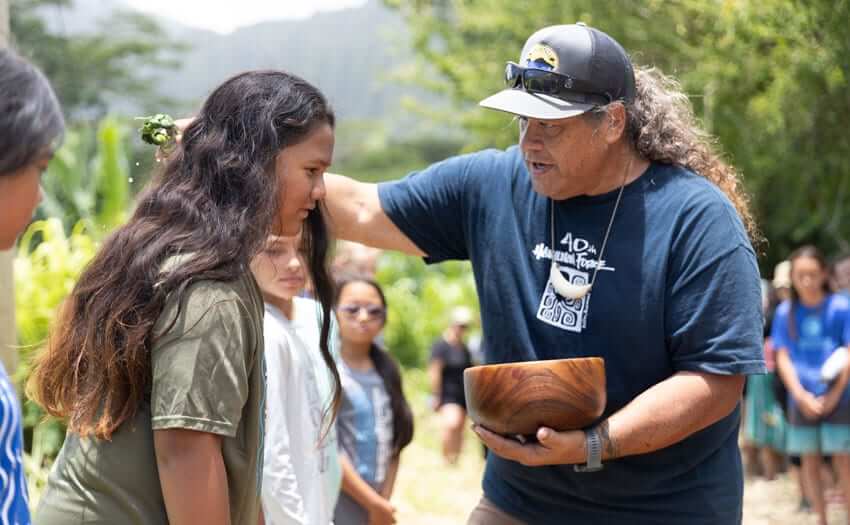
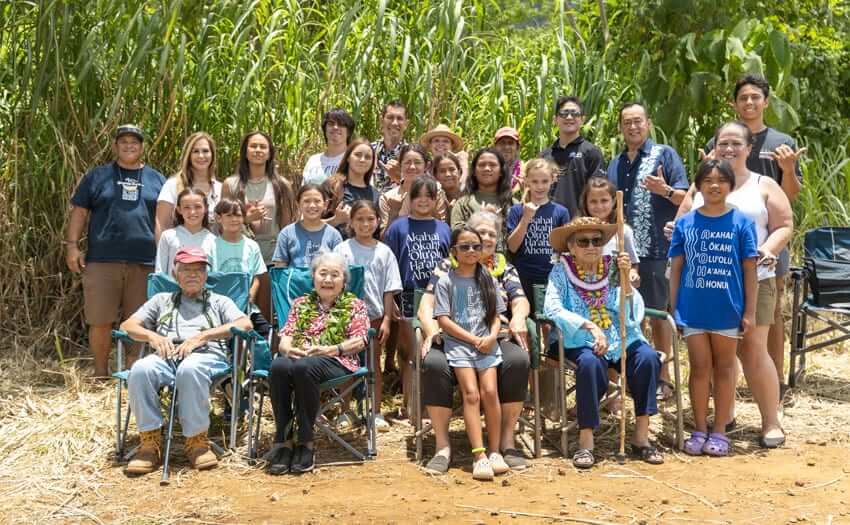
A community-led groundbreaking ceremony and celebration took place on July 5 – a significant milestone as construction begins on infrastructure and facilities supporting community-driven cultural and agricultural revitalization on lands disconnected by highway construction.
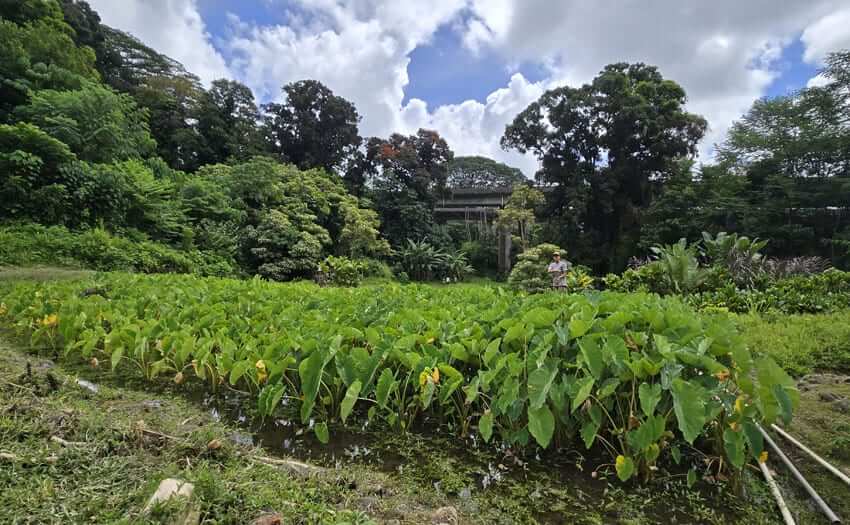
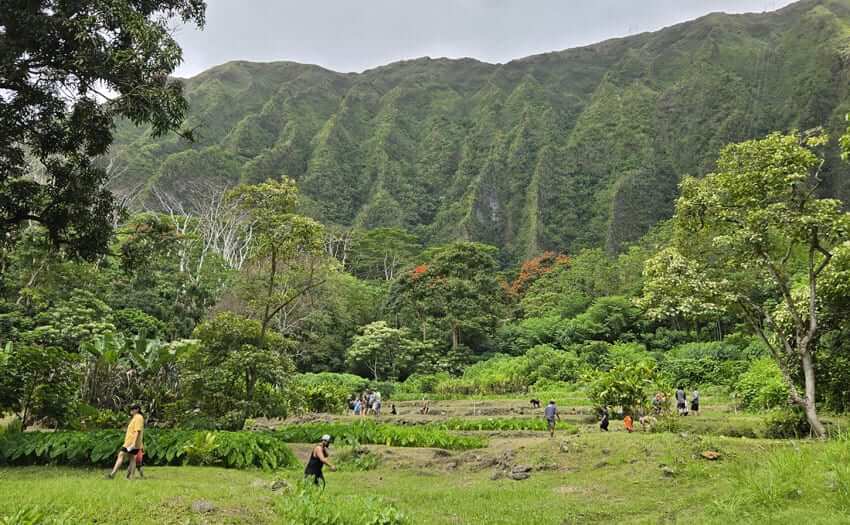
Nestled between the Likelike Highway and H-3 interchange, the loʻi kalo of Luluku were once part of a thriving food production system. For decades, however, this ʻāina lay dormant, cut off from access and neglected despite its deep ancestral significance.
Thanks to the efforts of local farmers, educators, and cultural practitioners, this land is again becoming a place of learning, healing, and abundance.
“To get to this point, it has been an amazing journey full of trials, pain, and loss,” said Mark Paikuli-Stride of the Luluku Farmers’ Association & Aloha ʻĀina Health and Learning Center (LFA-AHLC).
“Through adversity, we have built pilina and regained hope as a community. It is important that we celebrate these small victories or successes and take the time to acknowledge truth and our kūpuna who laid the foundation that we are building upon.”
In May 2025, a new construction contract was awarded by the Hawaiʻi Department of Transportation (HDOT). The new infrastructure and facilities (including restrooms, showers, parking, storage, an administrative office, and classroom spaces) are designed to serve the needs of a living, working cultural landscape, serving both farmers and the community with an area for processing foods, medicines, and other goods grown from the land.
They will support both the community’s active restoration work and its educational programs, especially those focused on mālama ʻāina and traditional food practices.
“This groundbreaking affirms the community’s unwavering commitment to ʻāina and culture,” said Office of Hawaiian Affairs (OHA) CEO Stacy Ferreira. “OHA remains steadfast in its role, ensuring that promises made to our people decades ago are upheld in places like Luluku – and this work must continue across the pae ʻāina.”
But long before this construction phase in the decades-long project became a reality, real restoration within Luluku’s cultural landscape was already happening.
In 2019, LFA-AHLC established a partnership with ʻĀina Momona, a Native Hawaiian nonprofit, and has continued to expand the restoration efforts of loʻi in Luluku. Their approach is hands-on, intergenerational, and deeply rooted in culture, fusing traditional Hawaiian farming and community engagement.
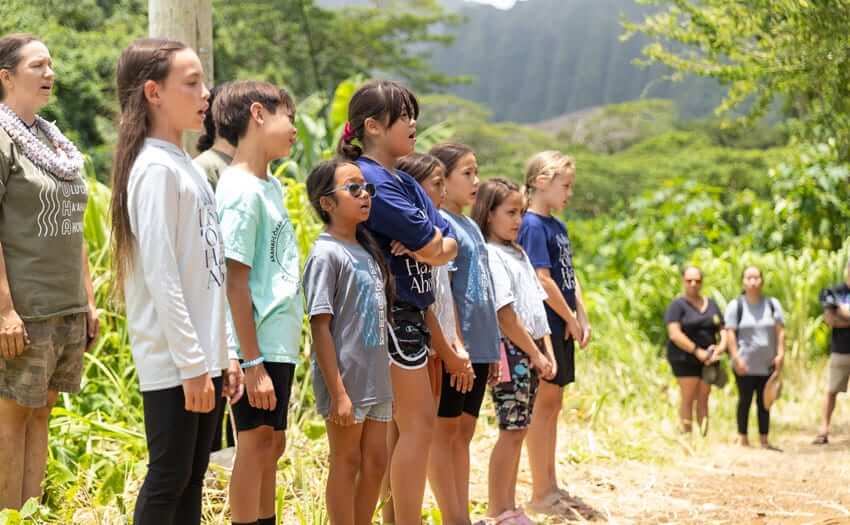
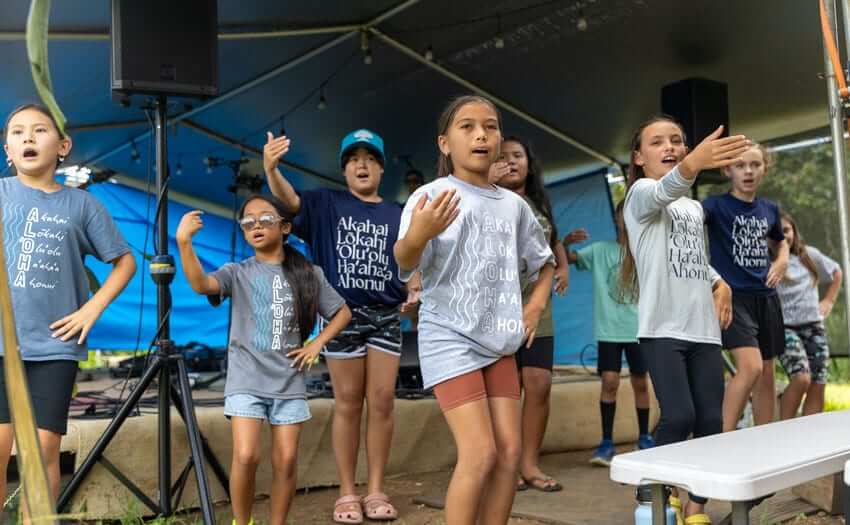
From 2023-2024, they served over 13,000 community members through field trips, volunteer workdays, ʻAi Pono cooking classes, and cultural learning experiences. Thousands of pounds of kalo have been grown and shared through meals prepared on-site with families learning to make poi and paʻi ʻai together.
Restoration here goes beyond agriculture.
Invasive species have been removed, loʻi terraces reestablished, and the hydrology of the area has begun to recover. The program serves a wide spectrum of the community, from keiki to kūpuna. Many have found their time on this ʻāina deeply healing. The return of wai to these lands is both literal and symbolic – a reflection of the resilience and capacity of communities to heal when reconnected to ʻāina.
“We do this work in honor of the many farmers and kūpuna who dedicated their lives to this ʻāina. We persisted for them and their legacy,” said Dr. Trisha Kehaulani Watson-Sproat, vice president of ʻĀina Momona. “Luluku shows the power of community stewardship rooted in ʻike kūpuna and kuleana. This isn’t just about farming kalo; it’s about feeding the lāhui and reclaiming our future.”
The significance of the Luluku project goes far beyond the facilities being built. It represents the long-term investment of people who never gave up on the land – or each other. It shows what is possible when communities lead, when agencies listen, and when ancestral knowledge guides restoration.
These support facilities weren’t just given to the community. They were fought for across decades, departments, and districts. From taro patches to tool sheds, every inch reflects years of effort by those who refused to let Luluku’s past be paved over or forgotten without a fight.
“The progress at Luluku stands as proof of what’s possible when Native Hawaiian communities lead. As trustees, it’s our kuleana to uplift and empower these grassroots efforts across all ʻāina impacted by historical injustices as part of our broader commitment to strengthening the entire lāhui,” said OHA Board Chair and Hawaiʻi Island Trustee Kaialiʻi Kahele.
As construction work moves towards completion in the next 12 months so, too, does the deeper work: feeding, teaching, and restoring. But Luluku isn’t simply being restored or rebuilt, it’s reawakening – one loʻi at a time.
The Hālawa-Luluku Interpretive Development (HLID) project was created by the Office of Hawaiian Affairs (OHA) to help mitigate some of the adverse impacts resulting from the construction of the H-3 Freeway by facilitating community collaboration on an interpretive development plan, stewardship management plans, and implementation of select mitigation actions determined in consultation with the stewards of each project area. OHA is a recognized consulting agency for the overall H-3 mitigation program and acts as the project manager for HLID.
OHA’s Kuleana for H-3 Mitigation
The Office of Hawaiian Affairs (OHA) recognizes the decades of work and perseverance of the Luluku stewards and celebrates this milestone accomplishment. Despite the excellent stewardship work occurring at the Luluku agricultural terraces, mitigation is still needed in the Hālawa and Haʻikū Valley areas also affected by Interstate H-3.
OHA’s role as the recognized consulting agency for this mitigation project includes kuleana for ongoing advocacy and holding both Hawaiʻi Department of Transportation (HDOT) and Federal Highway Administration (FHWA) accountable for making resources available to continue federal historic preservation-related mitigations and state-level conservation district commitments made decades ago.
OHA remains committed to working with Nā Kūpuna a me Nā Kākoʻō o Hālawa (NKNKHI) and the Koʻolau Foundation to bring about cultural restoration and preservation work in both Hālawa and Haʻikū valleys, respectively.