Compiled by Puanani Fernandez-Akamine

Twinkle Alohalani Borge
Sept. 15, 1969 – Aug. 5, 2024
Waiʻanae, Oʻahu: Twinkle Borge was one of Hawaiʻi’s most beloved and respected advocates for the houseless community. She overcame personal tragedy to become the matriarch and leader of Puʻuhonua o Waiʻanae, a community of about 250 houseless people – from keiki to kūpuna – living on state land adjacent to the Waiʻanae Boat Harbor. Borge, herself houseless, settled at the houseless encampment there in 2006. As years went by, and Borge got her life in order, she emerged as a leader. By the mid 2010s, under her leadership, Puʻuhonua o Waiʻanae transformed into a stable, orderly community with a governance structure that provides communally for the basic needs for its residents. With a successful community model established, 10 years ago, Borge led an effort to purchase a 20-acre plot of ma uka land to build a permanent village for her community. By 2020, she had raised sufficient funds, and building on the land has begun. Her work to create Puʻuhonua o Waiʻanae Mauka inspired the kauhale (tiny house) movement upon which Gov. Josh Green has based his homelessness policies. In addition to her leadership and compassion, Borge is remembered for her ability to connect with people across the spectrum – from the houseless to government officials. Upon her passing, Green said in a statement that Borge was an “incredible inspiration to so many.” In 2021, Borge was awarded the Hoʻokele Award from Hawaiʻi Community Lending and the Ulu Hana: Pewa Award from Partners in Development Foundation. In 2023, she was included in Hawaiʻi Business Magazine’s list of “Hawaiʻi’s Women of Influence.”
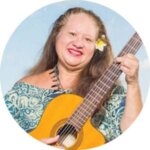
Teresa Renee Nanialiʻi Bright
Sept. 22, 1959 – Sept. 1, 2024
Kāneʻohe, Oʻahu: Teresa Bright was a multiple award-winning singer, songwriter, musician, arranger and producer. She was versed in traditional Hawaiian music as well as hapa-haole, American pop and jazz and widely acclaimed for her distinctive, lilting, nahenahe (soft, melodious) voice. Bright began her career in the early 1980s with Steve Maiʻi and the duo became a fixture at the iconic Pat’s at Punaluʻu, a restaurant and lounge. Known professionally as “Steve & Teresa,” their first album, Catching a Wave, was released in 1983. In 1988, Bright and Maiʻi won a Nā Hōkū Hanohano award for their (now) classic song, ʻUwehe, ʻAmi & Slide. Bright launched her solo music career in 1990 with the release of her album, Self Portrait, which won six Hōkū Awards in 1991, including Album of the Year, Female Vocalist of the Year and Song of the Year for her recording of Poliahu by her cousin, Frank Kawaikapu Hewett. In 1996, she won a Hōkū for Christmas Album of the Year for A Bright Hawaiian Christmas, and in 2009 she won a Hōkū for Jazz Album of the Year for Tropic Rhapsody. Bright was also extremely popular in Japan and frequently performed there. Between 1996-2012 she recorded eight albums for Japanese record labels and was a producer for Japanese recording artists. She also wrote and recorded commercial jingles for Sapporo Beer, Toyota and Japan Airlines. And in 2007 released Hawaiinawa a collection of popular Okinawan songs translated into Hawaiian. In 2020, Bright received the Hawaiʻi Academy of Recording Arts Lifetime Achievement Award.

Christabelle Yoshie Puanani Burgess
Dec. 12, 1947 – Sept. 6, 2024
Waiʻanae, Oʻahu: Poet, author, activist, change agent, community mediator and Zen Buddhist priest, Puanani Burgess worked for justice and opportunities for our communities for over 50 years. She became involved with the Protect Kahoʻolawe ʻOhana as a law student in the 1970s. Her training made her adept at writing grants, contracts and legal materials for the sovereignty movement. But during her third and final year of law school she stepped away, deciding her passions rested elsewhere. She returned to Waiʻanae and began her community work. She helped start a preschool, a mental health center, a farm and dozens of organizations that needed funding. Known for utilizing family and values-based mediation and storytelling, she served as a lead facilitator and trainer for The Center for Pacific American Women’s Leadership. She later designed a community-building and conflict transformation process “Building the Beloved Community” to deepen understanding and empathy between diametrically opposed groups that was so effective her material was used to develop a course for first-year students in the UH system. Burgess has shared Native Hawaiian practices throughout the world to bring healing and reconciliation. Her’s was a key voice in creating the “Aloha Agreement” between Ko Olina developers and the Waiʻanae community signed in 1987 which sets a precedent for communities to have a say in what happens in their rural environments. She received a Nā Loio Award in 1994, was named a Living Treasure of Hawaiʻi by the Honpa Hongwanji in 2009, and received the Council for Native Hawaiian Advancement “Hawaiian Advocate Award” in 2016.
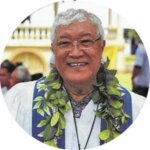
William Hiʻiakaikapoliopele Kaina
Nov. 27, 1932 – June 16, 2024
Honolulu, Oʻahu: Beloved Kahu William Kaina ministered to the people of Hawaiʻi for some 70 years. A descendant of King Kalaniʻōpuʻu, Kaina was born in Hoʻokena and raised in Kalapana on Hawaiʻi Island. For more than 50 years he served as kahu at churches on Maui, Kauaʻi and Oʻahu, including at Kawaiahaʻo Church for 14 years. He was the coordinator of Christian ministry for 48 Hawaiian congregational churches and the Hawaiʻi Conference of the United Church of Christ, served on the Hawaiian Hymnal Committee which published two hymnals in ʻōlelo Hawaiʻi, and served as interim conference minister for the Association of Hawaiian Evangelical Churches and, for a season, as its president. He was a chaplain for the Hawaiʻi Civic Air Patrol, and served on the board of directors for the American Red Cross and the Bishop Museum, sat on the advisory board for Liliʻuokalani Children’s Center, was on the Governor’s Committee on Economic Development and on the Hawaiian Community College Scholarship Committee, and was a member of the West Honolulu Rotary Club, the Pearl Harbor Hawaiian Civic Club and the Kuini Piʻolani Hawaiian Civic Club. A native speaker, Kaina was a member of the ʻAhahui ʻŌlelo Hawaiʻi and ʻAha Mānaleo. In 2003, he was knighted by the Rotarians for outstanding public service. He received a Schuler Golden Lei Award for community service in 2004, a David Malo Award from his rotary club in 2005, and a Kalani Aliʻi Award from the Hawaiian Royal Societies in 2009. In 2023, Kaina received Kukui Lama Kū recognition by the Association of Hawaiian Civic Clubs.

Cecelia Mona Joy Lum
Sept. 17, 1929 – Oct. 24, 2024
Honolulu, Oʻahu: Mona Joy Lum was a Hawaiian music icon and one of the original “Songbirds of Waikīkī.” Her prodigious talent was evident at a young age. During the 1930s she studied hula under Joseph ʻIlālāʻole completing her ʻuniki as an ʻōlapa (dancer) at age 9. As a young woman in the early 1950s, Bill Aliʻiloa Lincoln invited her to sing at the Princess Kaʻiulani Hotel and from there she quickly became a darling of the Waikīkī music scene performing at venues like the Moana Surfrider, Royal Hawaiian and Halekūlani hotels. She was soon approached by Lei Collins to become a member of the Halekūlani Girls as an ʻukulele player, singer and hula dancer. In the mid 1950s she recorded her first album with baritone singer Val Haʻo and in 1956, as a member of the Hale o Nā Aliʻi o Hawaiʻi (Royal Society’s) Hālau ʻo Wahīikaʻahuʻula, Helu ʻEkahi, was the featured obbligato soloist in the ʻAhahui’s annual song contest. Also in 1956, as part of a USO tour, she performed at U.S. Air Force bases across Europe. This led to a two-year engagement at the famous Lexington Hotel in New York City, where she became known as “The Lex Girl.” She reprised that role a second time in 1963. Over the decades she continued performing, releasing her first CD in 2003. As an active member of Kawaiahaʻo Church, she sang in its choir for years. In 2018, having been a member of Hale o Nā Aliʻi for 67 years, she was awarded the rank of Lālā Papa Kahuna Naha, and seating among the Papa Hālau Aliʻi. In 2022, Lum was presented with a Nā Hōkū Hanohano Lifetime Achievement Award.

Stephen Kaneʻaʻi Morse
Aug. 11, 1946 – Sept. 29, 2024
Waimānalo, Oʻahu: A social worker, activist, author, voyager and ʻŌiwi leader, Stephen Morse is perhaps best known as one of the celebrated “Kahoʻolawe Nine” – the group of young activists who occupied the island of Kahoʻolawe for several days in 1976 to protest the U.S. military’s use of the island for bombing target practice since WWII. The occupiers were eventually tracked down and arrested, but their fearless resistance set in motion a movement that would capture the heart of the lāhui. It was the catalyst for the formation of the Protect Kahoʻolawe ʻOhana whose work through the 1970s and 80s brought an end to the bombing in 1990 and the return of the island to Hawaiʻi in 1994. A social worker by training, in 1974 Morse co-founded the Hawaiian Coalition of Native Claims which eventually morphed into the Native Hawaiian Legal Corp. He also helped to found nonprofit Alu Like which provides employment, job training in service to the Native Hawaiian community. Morse also served for a time as the housing director at the Office of Hawaiian Affairs, as a social worker for Liliʻuokalani Trust, as executive director of the nonprofit Blueprint for Change, and he helped train the inaugural crew of Hōkūleʻa that sailed to Tahiti in 1976. At home in Waimānalo, he grew fruit, kalo and flowers on his family farm. Morse was also a writer, co-authoring a report “The Spirit of Kaloko-Honokohau” that helped establish the National Historical Park in Kona. He also chronicled the 1976 occupation of Kahoʻolawe in his book, First Landing: Story of the Kahoʻolawe Nine.
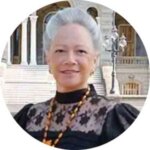
Nālani-Alua Yvonne Olds Napoleon
July 9, 1937 – Sept. 13, 2024
Kailua, Oʻahu: Celebrated singer, dancer and community advocate Nālani Olds Napoleon began her career in the 1950s as a featured dancer with Lei Collins’ Halekūlani Girls and later sang in Haunani Kahalewai’s Top of the Isle show. In 1966, she was a regular on the Hawaiʻi Calls television series and by age 18 was performing at New York City’s popular Lūʻau 40 tiki bar. Upon returning home, she performed at the Hilton Hawaiian and Kahala Hilton hotels. In the 70s she performed at Caesar’s Palace with Danny Kaleikini, recorded two solo albums, was a vocalist for the documentary series, The American Experience: Hawaiʻi’s Last Queen, and helped found the Prince Lot Hula Festival. She also developed a musical program for the state library system, and, in 1990, co-produced a traveling musical tribute, Nā Kulaiwi Kaulana. Napoleon was a soloist with the Royal Hawaiian Band and had the honor of performing at Carnegie Hall. Outside of her music, she was an advocate for the incarcerated, for victims of domestic violence, and for iwi kūpuna. As part of Mōkapu Iwi Kūpuna she pushed for the implementation of NAGPRA laws and worked to educate the military at KMCAS. She was a docent at ʻIolani Palace, a member of the Hale o Nā Aliʻi royal society and the Hawaiʻi Academy of Recording Artists. She served on the UH Committee for the Preservation of Hawaiian Language, Art, and Culture, and was an At-Large trustee for the Office of Hawaiian Affairs. Napoleon received the Kahili Award from the Hawaiʻi Visitors Bureau in 1990 and 1999, was named a Honpa Hongwanji Living Treasure of Hawaiʻi in 2009, and received a Nā Hōkū Hanohano Lifetime Achievement Award in 2012.
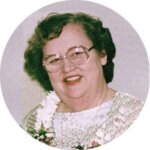
Winona Keʻalamāpuana Ellis Rubin
Aug. 25, 1929 – Aug. 29, 2024
Moanalua, Oʻahu: A dynamic leader, administrator and political advocate, Winona Rubin served in a variety of leadership roles throughout her long career, dedicating most of her professional life to the betterment of Native Hawaiians and garnering the respect of the community. During the 1960s and 70s, Rubin was an administrator at Kamehameha Schools, serving as the schools’ first dean of students. She later became principal of the high school, and then the schools’ first director of student personnel services for grades K-12. In the mid 70s, Rubin helped to found Alu Like, a Native Hawaiian service organization incorporated in 1975. She went on to help launch the fledgling nonprofit serving as its first president and CEO. In the 1980s, Rubin left Alu Like to become the first female director of the Hawaiian Telephone Company. Then from 1986-1994, when John Waiheʻe, III, became governor, she served two terms in his administration as director of the state Department of Human Services. Rubin, who was born on Kauaʻi came out of retirement to serve as an aide to Office of Hawaiian Affairs’ Kauaʻi Island Trustee Donald Cataluna in the late 1990s. Rubin was a member of the Prince Kūhiō Hawaiian Civic Club and was the recipient of many professional awards and accolades. In 1987 she became the first woman to receive an ʻŌʻō Award from the Native Hawaiian Chamber of Commerce. In 1999, she received a David Malo Award from the West Honolulu Rotary Club, and in 2000 Kamehameha Schools honored her with its most prestigious award – The Order of Ke Aliʻi Pauahi.
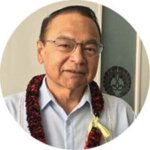
Sherman Thompson
Oct. 1, 1956 – June 4, 2024
Honolulu, Oʻahu: Kahu Sherman Thompson was known as a spiritual leader who was accepting of different faiths and beliefs. Raised in Lahaina in a Buddhist household, he was introduced to Christianity as a boarder at Kamehameha Schools. After graduating, Thompson returned to work for Kamehameha – beginning what would be a 47-year career. He started in the Boarding Department and in the schools’ religious services department mentored by Kahu David Kaupu. He served as an advisor to the school deputation team, as associate chaplain, and for the last five years of his career, as chaplain. Over the years, Thompson served at various Honolulu churches including Kaumakapili, Kalihi and Moanalua, and Nuʻuanu Congregational. He also provided spiritual support to business, corporate and military entities. Thompson seamlessly integrated both his Buddhist and Christian faith perspectives and was a strong advocate for interfaith endeavors. In addition to his service to the congregational church, he was a member and advisor to the Honpa Hongwanji Hawaiʻi Betsuin and the Lahaina Hongwanji Mission Temples and dedicated to preserving Obon music and traditions. He served on numerous boards and councils, and was a trustee of Pacific Buddhist Academy. He was often asked to conduct blessings, weddings and funerals for people of both faith traditions across Hawaiʻi and on the continent. In 2022, he received the prestigious Kalani Aliʻi Award presented by the Hawaiian Royal Societies in recognition of his contributions to the Hawaiian community.
Author’s note: This hoʻomanaʻo is intended to recognize and honor the extraordinary contributions to our lāhui of those profiled. These are individuals who are widely known in our community and this is a mere snapshot of their achievements based on information compiled from various community resources. The true richness of their lives – and how deeply they are loved and will be missed by their ʻohana and friends – cannot be captured in this brief format. We also acknowledge that there are many, many others who were lost to our lāhui this past year who we did not profile. For this, we apologize because we know their loss also weighs heavily on the hearts of those who they loved and who loved them. As ever, our readers are welcome to submit Haliʻa Aloha (fond remembrances) of their loved ones for publication in Ka Wai Ola newspaper. Ke Akua pū. www.kawaiola.news/about/submissions/